


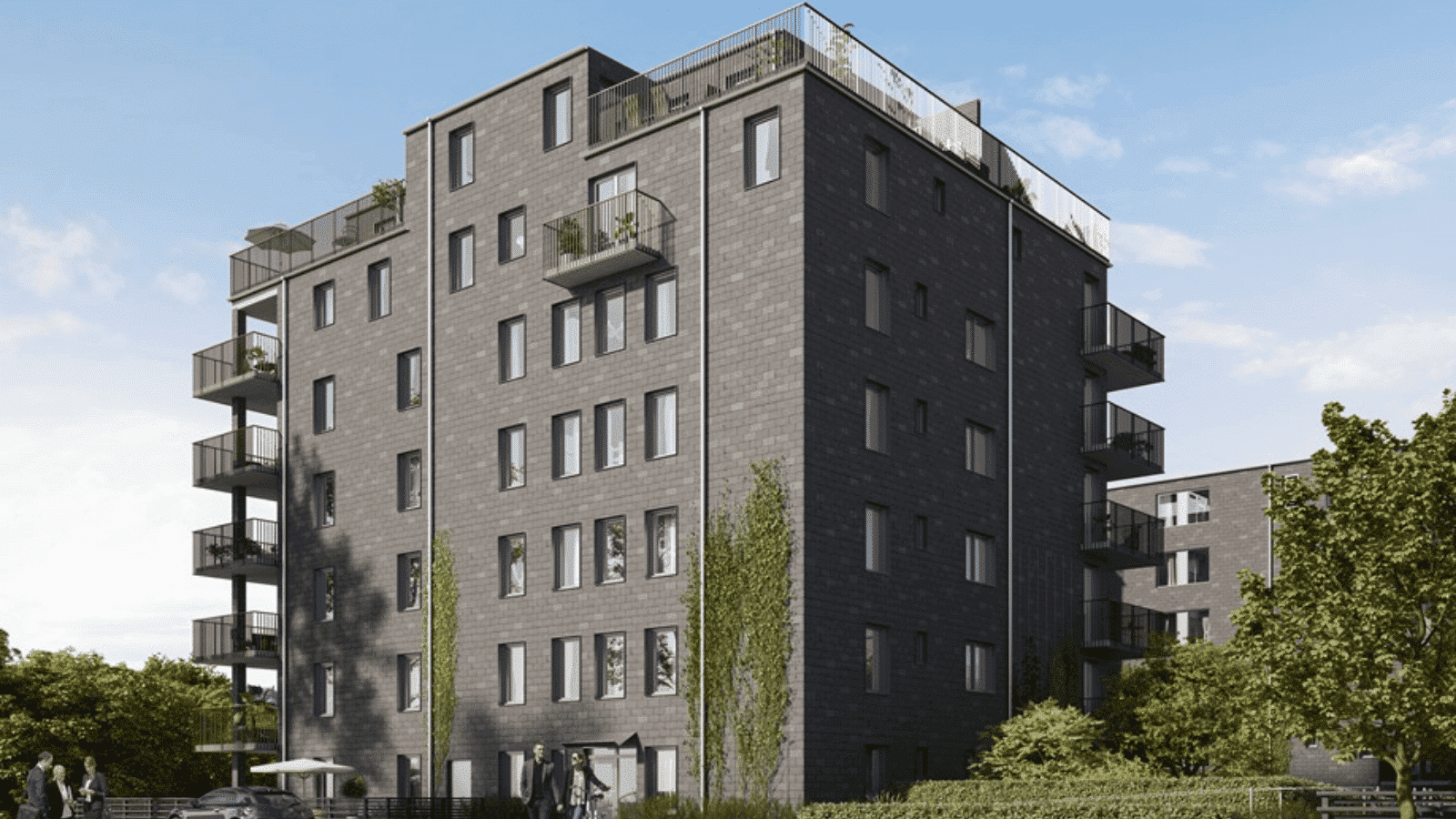

Energy renovations are not only about saving expensive kilowatt-hours. When the building envelope and technical systems are improved, everyday life inside the building changes as well. These effects – often invisible in an energy performance certificate – can be just as important for comfort, health, and property value.
From kilowatt-hours to Comfort
As the EU’s Renovation Wave gathers pace and Sweden develops its national renovation plan, attention has mainly been focused on energy performance, emission reductions, and financial feasibility. Yet, in many residential projects, both building owners and occupants find that the greatest benefits of renovation go far beyond energy savings. When walls and windows are upgraded, draughts disappear and temperatures even out, the entire indoor experience transforms — becoming quieter, healthier, and more comfortable. In fact, residents in renovated buildings often report higher satisfaction with their indoor climate, even when the measured energy savings are slightly below expectations.
Thermal Comfort – The Most Underestimated Benefit
A cold wall or leaky window can reduce comfort as much as several degrees’ difference in room temperature. When we sit close to cold surfaces, heat radiates from our body toward the wall, making the room feel cooler than it actually is. A better building envelope — with improved insulation, airtightness, and well-insulated windows — reduces this asymmetry between air and surface temperatures. The result is enhanced indoor comfort, fewer draughts, and less need to keep indoor air temperatures high.
Fact box: How surface temperature affects comfort
A wall surface temperature of 17 °C often feels uncomfortably cold, even if the air temperature is 21 °C. Increasing the surface temperature to 20 °C through added insulation or better windows makes the room feel significantly more pleasant – while using less energy.
The Critical Balance Between Airtightness and Ventilation
When airtightness improves, unintentional leakage decreases. This benefits the energy balance but also requires careful consideration of ventilation. In older buildings with natural ventilation, airtightness improvements can paradoxically worsen indoor air quality unless outdoor-air supply is ensured. Modern mechanical ventilation systems with heat recovery (FTX) can, on the other hand, provide both better air and lower energy losses – reducing CO₂ levels, controlling humidity, and filtering out particles. EU Horizon 2020 projects show that combining improved airtightness with FTX ventilation can cut energy use by up to 30%, while at the same time increasing occupant satisfaction.
Moisture, Sound, and Light – The Forgotten Qualities
Moisture is the most critical factor in building physics. A tighter envelope reduces the risk of moisture convection – humid air leaking through the structure. If this moist air meets a cold surface, condensation may occur, potentially leading to mold or rot. This often happens in attics after additional insulation, if the air barrier in the ceiling structure has not been properly sealed. A thorough analysis of vapor barriers and ventilation strategies is therefore essential. Energy renovation also improves the acoustic environment — almost always for the better. New low-U-value triple-glazed windows reduce traffic noise far more effectively than old double-glazed ones. Daylight is affected too: the choice of glazing determines how much solar gain and daylight enter the room, which is especially important in northern climates.
Health, Well-Being, and Social Effects
The World Health Organization estimates that around 20 % of Europe’s population live in homes affected by inadequate heating or problems with damp, or mold. The link between poor indoor climate and ill health is well-established: cold homes increase the risk of respiratory illness, and damp or mold is associated with asthma. Renovation mitigates these risks – particularly for the elderly and children. Residents in renovated homes report better sleep, less coughing, and greater comfort. For property owners, this translates into fewer complaints, lower tenant turnover, and a stronger market reputation.
The Risk of Overheating in Summer
In recent years, a new challenge has emerged — partly due to climate change: overheating during summer. A well-insulated and airtight building without proper solar shading can quickly become too warm during hot spells. The Swedish National Board of Housing (Boverket) has observed that indoor temperatures in newly renovated buildings often exceed 26 °C for several consecutive days. A holistic approach is needed – combining envelope design, ventilation, solar control, and occupant behavior. Simulation in BIM Energy can predict these effects and help optimize solutions.
Property Economics and Long-Term Added Value
For a property owner, operating costs are only part of the equation. A building perceived as draughty or noisy often suffers from shorter tenancy periods and more complaints.
After a well-executed energy renovation, the property becomes more attractive, maintenance costs decrease, and its value rises. The Swedish Property Federation (Fastighetsägarna Sverige) has shown that improved comfort correlates with higher market value.Renovations also strengthen prospects for environmental certifications such as Miljöbyggnad or BREEAM In-Use.
Conclusion – When Comfort Becomes the Hidden Gain
Reducing energy use in buildings is essential for achieving climate goals. But every energy renovation also carries something more: the opportunity to create healthier, quieter, more comfortable homes. Improvements to the building envelope and technical systems enhance thermal comfort, air quality, and acoustic conditions – boosting well-being and satisfaction. For both building owners and occupants, this is an investment in quality of life – not just in energy metrics. Want to understand the technical and economic effects of different renovation measures? Explore BIM Energy – the tool that lets you simulate all of this in one single interface, quickly and easily.
You can start a free trial directly on the BIM Energy website!